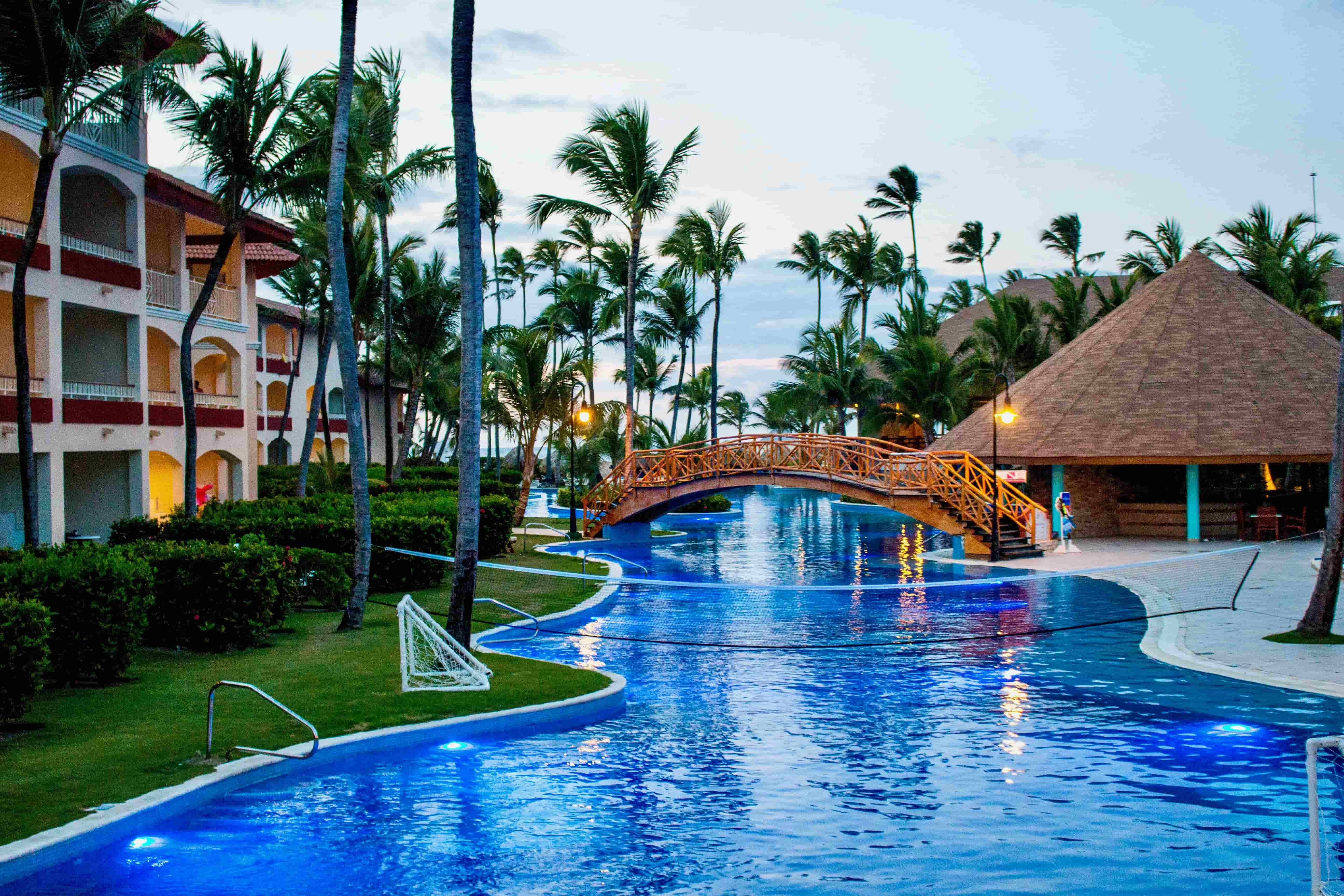
Punta Cana is not a single market. It is a 60-kilometre coastal corridor containing at least eight distinct investment sub-markets, each with different supply dynamics, buyer profiles, price trajectories, and rental characteristics. Treating it as one zone is the single most common mistake international investors make.
This analysis breaks down the areas that matter in 2026, where capital is moving, and where the risk-adjusted opportunity remains compelling.
The Bávaro Core: Established, Liquid, Crowded
Bávaro — the stretch running south from the Palma Real shopping centre to Punta Cana village — remains the heartland of the market. Product here ranges from sub-$80,000 studio condo-hotels to $600,000 luxury villas, with the bulk of transaction volume sitting in the $120,000–$220,000 bracket.
Why investors still buy here:
- The deepest secondary resale market in the country — exit liquidity is real
- Gross rental yields of 7–9% are achievable on well-managed condo-hotel units
- The infrastructure is genuinely world-class: international airport 15 minutes away, hospitals, schools, shopping
The caveat: Supply has caught up with demand in Bávaro. Hundreds of units have delivered since 2022, and occupancy rates across the mid-tier condo-hotel segment have compressed from historical highs. Buyers acquiring undifferentiated product at 2021 price levels and expecting 2019 yields will be disappointed.
Our view: Selective entry. Off-plan product from proven developers at 10–15% below comparable resale pricing makes sense. Avoid bulk-supply buildings with 300+ units unless the operator has a demonstrable track record.
Punta Cana Village: Branded Residences and Long-Term Leases
The area immediately surrounding the original Punta Cana International Airport — the private zone controlled by the Rainieri family — is a different proposition entirely. Product here includes the Tortuga Bay Residences (the only hotel Punta Cana founder Oscar de la Renta ever designed), estate lots, and a small number of branded villas.
This is long-term hold territory. Rental yields are secondary to capital preservation and lifestyle utility. Entry prices start at $800,000 and rise sharply.
Best suited to: HNWI buyers with a 10-year horizon and an interest in the lifestyle asset alongside the investment thesis.
Los Corales and Cabeza de Toro: The Value Inflection Zone
Between Bávaro and Cap Cana, the Los Corales strip has quietly outperformed the broader market over 2023–2025. Several factors explain this:
- Proximity to Cap Cana without the Cap Cana price premium
- A denser concentration of boutique buildings (40–80 units) where operators maintain occupancy more effectively
- Direct beach access in a segment where beachfront commands a 30–40% premium over inland product
Key metric: Beachfront condo-hotels in Los Corales averaged 74% annual occupancy in 2025, versus 61% for comparable inland Bávaro product, per our proprietary operator survey.
Entry price range: $180,000–$380,000 for a well-positioned one- or two-bedroom unit.
The Northern Corridor: Miches and El Limón
The stretch north of the airport — particularly around Miches Bay and El Limón — is where pre-cycle capital is flowing. Several factors are converging:
- Government infrastructure investment: The government has committed to a four-lane highway connecting Miches to the airport, scheduled for completion in 2027.
- Major developer interest: Cigar City and at least two international hotel groups have acquired land parcels in the Miches area.
- Land arbitrage: Beachfront land in Miches is still pricing at $40–$80 per square metre compared to $300–$600 in established Bávaro zones.
The risk here is pure execution: no major resort infrastructure exists yet, rental income is speculative, and construction timelines in undeveloped zones routinely extend. This is early-adopter positioning, not yield investing.
What the Data Tells Us for 2026
| Zone | Avg. Entry (1BR) | Gross Yield | Liquidity | Risk |
|---|---|---|---|---|
| Bávaro Core | $145,000 | 6–8% | High | Medium |
| Punta Cana Village | $800,000+ | 2–4% | Low | Low |
| Los Corales | $195,000 | 7–9% | Medium | Medium |
| Cap Cana (adjacent) | $280,000 | 5–7% | Medium-High | Low-Medium |
| Northern Corridor | $85,000 | Speculative | Very Low | High |
Practical Guidance for 2026 Buyers
Operator quality matters more than location. A well-managed building in a secondary location will outperform a poorly managed building on a prime stretch. Request three years of verified occupancy data before committing.
CONFOTUR still has runway. Law 171-07 (the tourism incentive law) provides 10–15 year exemptions on property transfer tax, IPI, and capital gains for qualifying developments. Many Bávaro-era CONFOTUR approvals are expiring, making new approvals in the northern corridor comparatively more attractive on a tax-adjusted basis.
The peso has stabilised. USD-denominated pricing in established zones has largely held, but buyers transacting in Dominican pesos should account for currency dynamics in their yield calculations.
Get a local attorney. Title chain integrity varies significantly across zones. Independent legal representation — not the developer's recommended attorney — is non-negotiable.
This analysis reflects DominicanVest's independent research as of Q2 2026. All yield figures are gross estimates based on operator surveys and should not be construed as guarantees of return.